Why Sushruta has patients from seven countries
Disease patterns, health systems and patient stories differ around the world. Here's why our 125 cases span India, the USA, the UK, Nigeria, Brazil, Japan and Egypt.


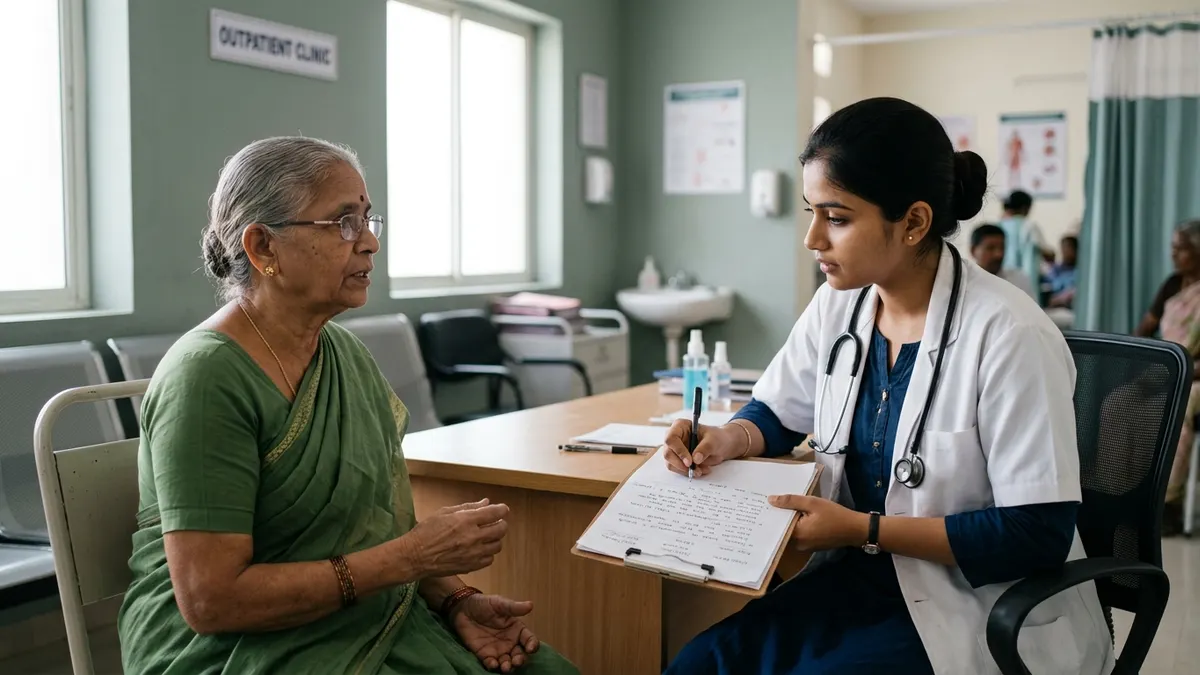
Textbooks tend to describe "the patient" as if there were only one. In reality, the person in front of you brings their own setting, history and circumstances, and the same symptom can mean different things in different places. That's why Sushruta's patients come from seven countries.
Where the cases come from
There are 125 cases across 7 regions, covering 10 specialties:
- India: 30 cases, set in South India, in Tamil Nadu
- United States: 20 cases, from New York, Chicago and more
- United Kingdom: 15 cases, set in NHS primary care
- Nigeria: 15 cases, from Lagos and rural areas
- Brazil: 15 cases, from São Paulo and the Northeast
- Japan: 15 cases, from Tokyo and Okinawa
- Egypt: 15 cases, from Cairo and Upper Egypt
The specialties are general medicine, surgery, paediatrics, obstetrics and gynaecology, orthopaedics, dermatology, psychiatry, emergency medicine, ophthalmology and ENT.
Why location matters clinically
Disease patterns vary. The conditions that are common, and the ones you should keep in mind, depend a lot on where a patient lives. An infection that's high on the differential in one region might be rare in another, while lifestyle-related conditions show different patterns again.
Context shapes the history. Occupation, diet, living conditions and travel all change which questions matter. A good history in one setting might miss something important in another.
Health systems differ. How a patient reaches you, what's been tried already and what follow-up is realistic all depend on the system they're in. A plan that works in one setting may not be practical elsewhere.
Why it matters for you
You'll probably work with people from many backgrounds. Medicine is increasingly international. Many doctors train in one country and work in another, and every health system serves patients whose lives began somewhere else.
It breaks pattern-matching habits. If you only ever see one kind of patient, it's easy to learn shortcuts that don't travel well. Seeing the same complaint in different settings pushes you to reason from the story, not from a template.
It builds curiosity and respect. Asking about someone's background, work and beliefs isn't a box to tick. It often changes the diagnosis and the plan, and it makes patients feel heard.
How to use the regions
- Start with your own setting. Practise the cases closest to where you study or work, so they reinforce your postings.
- Then branch out. Try a region you know less about. Notice which questions you'd normally skip.
- Compare. If you see a similar complaint in two regions, think about how your differentials changed and why.
Each case includes the local context and disease patterns you'd really meet, so the history you take should reflect where the patient is. As with all Sushruta cases, they're designed for learning and practice. Treat every patient as an individual, not a stereotype of their country, which is exactly the habit we hope these cases help you build.