How to prepare for OSCEs with simulated patients
OSCEs reward structure, communication and calm under a timer. Here's how to use simulated patients to rehearse the stations until the routine feels natural.

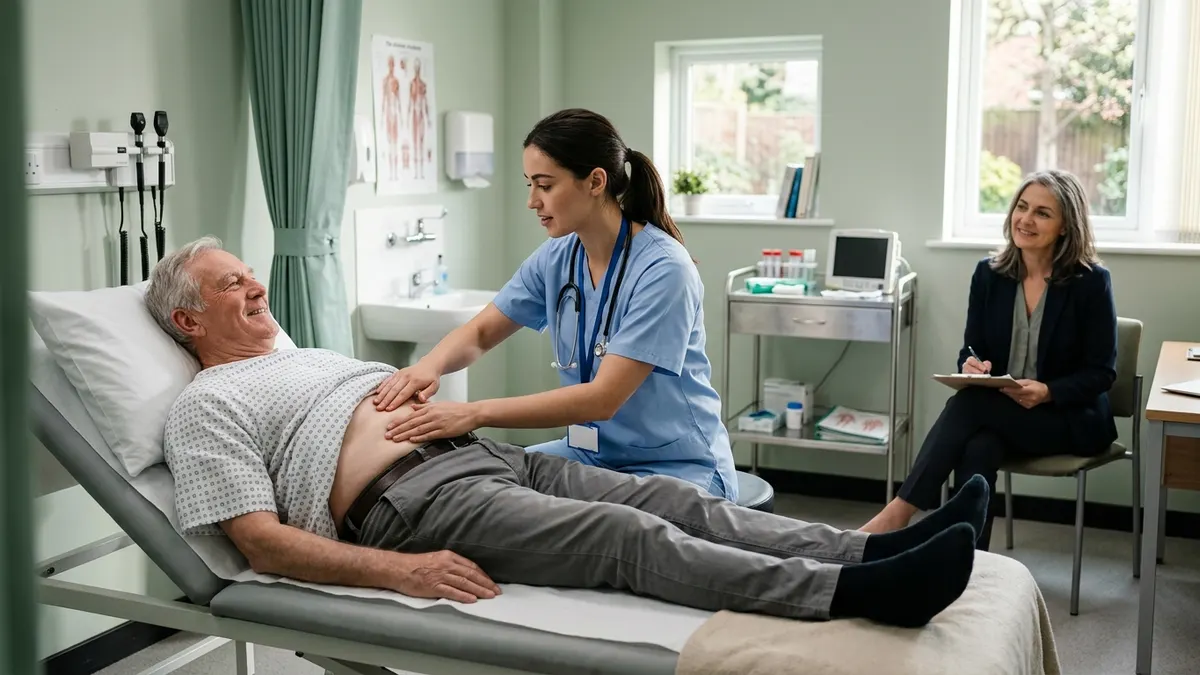
OSCEs test something that's hard to revise from a book: whether you can do the thing, in front of an examiner, against the clock. Knowing the content is necessary, but it isn't enough. The students who do well have usually rehearsed the stations so many times that the structure runs on its own.
Understand what's being marked
Most OSCE stations reward a mix of:
- Structure. A logical, complete approach to the task
- Communication. Introducing yourself, explaining what you're doing, listening and checking understanding
- Clinical reasoning. Picking up the important findings and drawing sensible conclusions
- Safety. Spotting red flags, knowing your limits and safety-netting
- Professionalism. Consent, dignity and respect throughout
Read your medical school's guidance and any published mark schemes. Knowing what the examiner is listening for changes how you practise.
Build a routine for each station type
History stations, examination stations, explanation stations and data interpretation stations each have a predictable shape. Write a short checklist for each one, then practise until you don't need it. For history stations, a structure like the one in our post on taking a focused history in 10 minutes is a good start.
Practise with real people when you can
Nothing replaces practising with classmates. Take turns playing doctor, patient and examiner. The examiner role is underrated: watching someone else and marking them against a checklist teaches you what good looks like.
Useful group habits:
- Use a timer. Stations are short, and time pressure changes how you think.
- Give specific feedback. "You didn't ask about allergies" is more useful than "that was good".
- Rotate topics. Don't only practise the stations you enjoy.
Use simulated patients to fill the gaps
Study partners aren't always available, and they get tired of playing the same patient. That's where simulated patients help. An AI patient can be available at any time and gives you a fresh case every session.
In Sushruta, each patient has their own history, some of which they won't reveal unless you ask the right question, much like a well-briefed actor. Voice mode lets you speak out loud, which is much closer to an OSCE than typing. At the end you're graded on history, examination, diagnosis, treatment and follow-up, with specific notes on what you missed.
To get the most out of it for OSCE prep:
- Set a time limit for yourself that matches your exam stations.
- Speak as you would to a real patient. Introduce yourself, explain, check understanding.
- Summarise aloud at the end, as if presenting to the examiner.
- Review your lowest axis and repeat a case in the same specialty soon after.
Know the limits
AI patients are great for rehearsing history-taking, reasoning and communication. They can't replace practising physical examination on a real person, and AI grading isn't the same as an examiner's mark scheme. Use simulation for volume and repetition, and use your peers and tutors for hands-on skills and formal feedback.
In the final weeks
Little and often beats last-minute marathons. A few stations a day, every day, will do more for your confidence than one long weekend session. On the day itself, trust the routine you've built. It's there so you can focus on the patient in front of you.